The roadmap was full and the runway wasn’t.
Every feature in the backlog was someone’s conviction, none of it was validated, and the cost of certainty is measured in runway. The real product question wasn’t “what should we build next.” It was “what do we actually know?” The answer was: not enough, and no system for learning faster.
Learn faster than you burn.
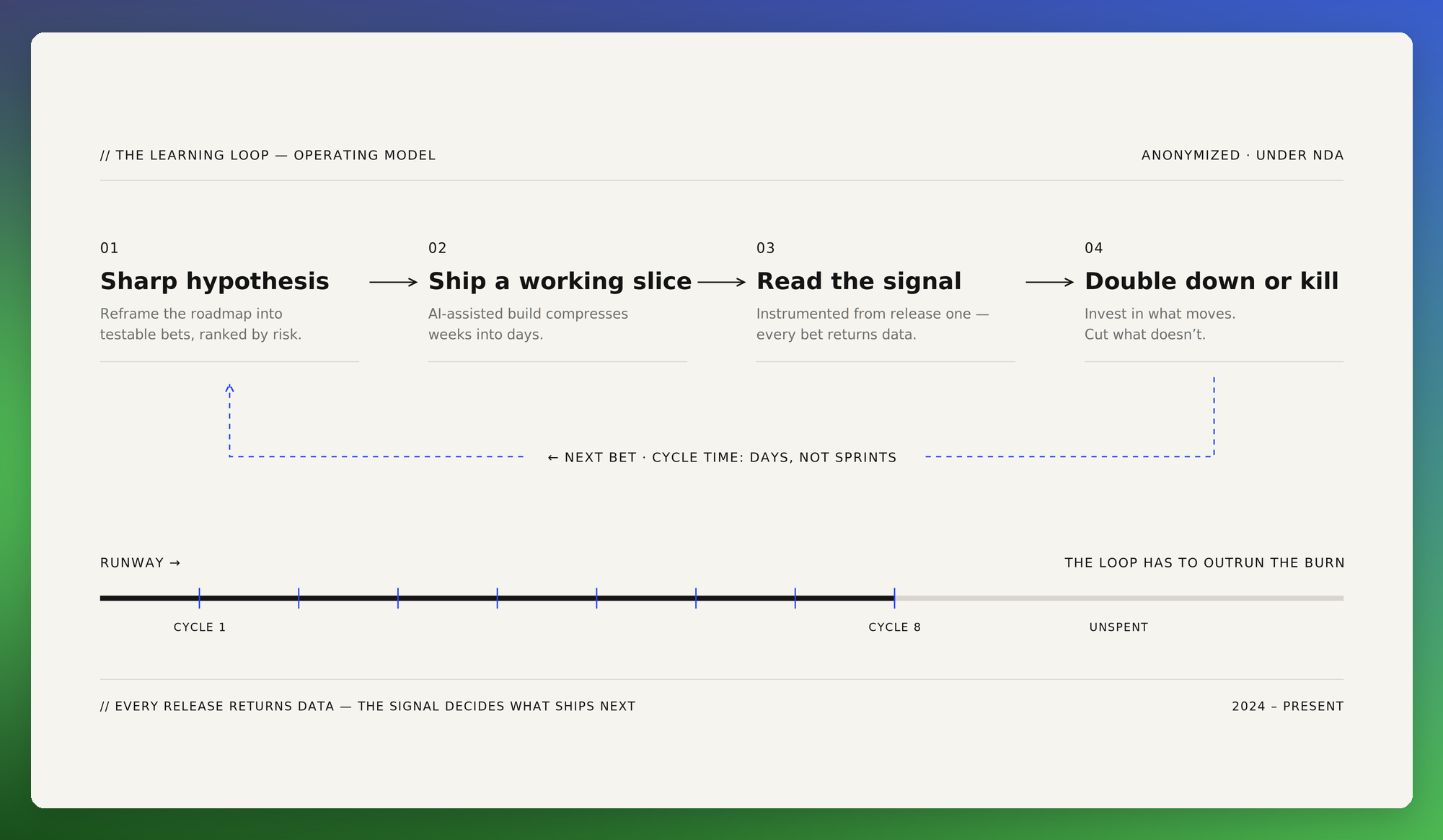
A tight operating model: set a sharp product hypothesis, ship a working slice of it in days using AI-assisted tooling, put it in front of real users, and let the signal decide what to build next.
With no time for a long discovery phase, research and building happened in the same loop: I worked directly with founders who had deep domain knowledge, mined the customer conversations the company already had, and treated every shipped slice as a live experiment.
Primary users: two anonymized archetypes from our discovery calls: the self-reliant optimizer who resents money that vanishes, and the planner who wants certainty when the worst happens. Different psychologies, one shared bar: this product had to earn trust fast, in a category where trust is everything.
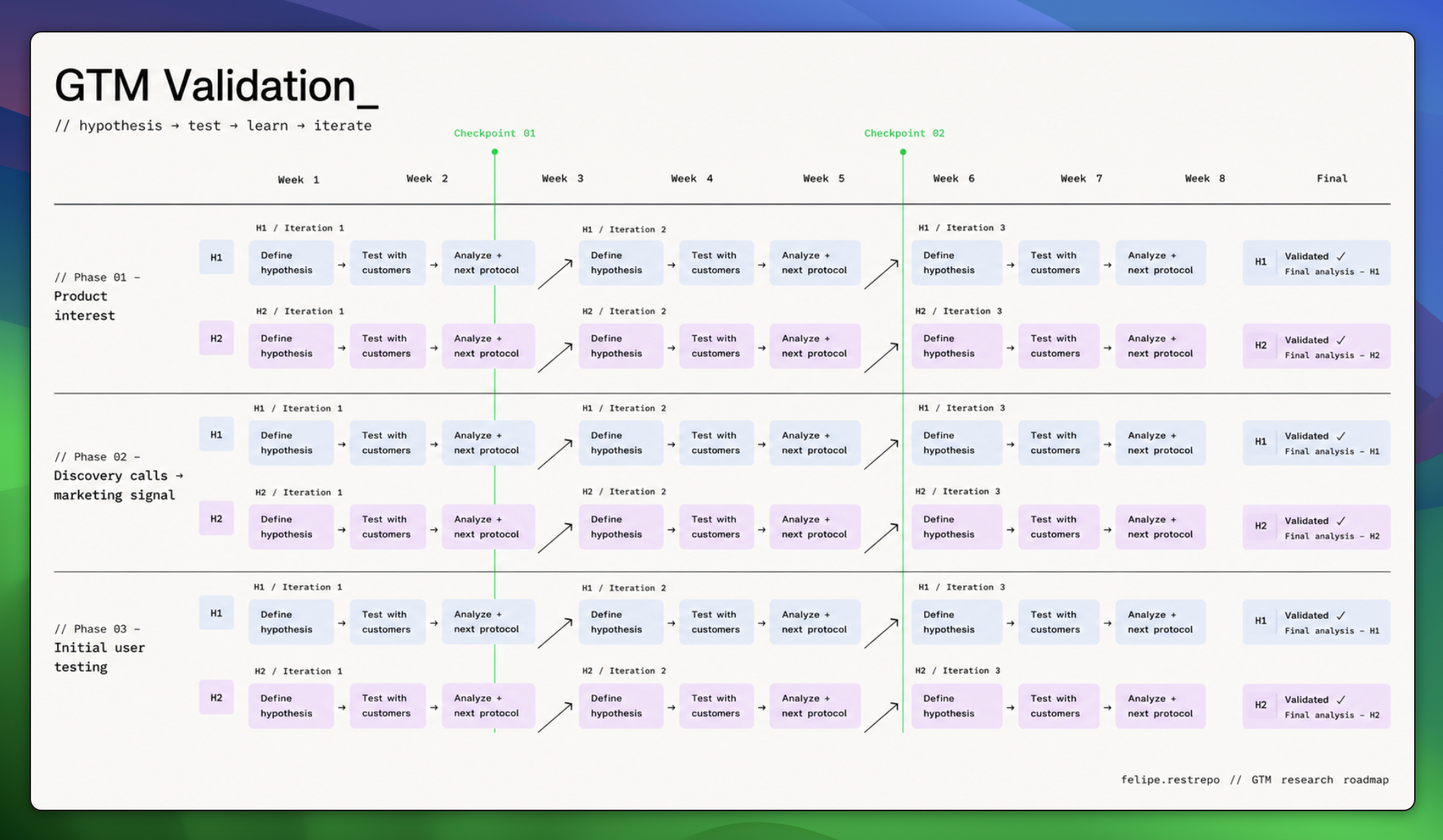
…validate the riskiest assumption in the product with real users in weeks, not quarters, without a full design and research team?
Ideation ran on a simple rule: every idea had to leave the whiteboard as a bet.
We sketched wide, then forced each concept through the same three questions: what does it assume, how fast can we test it, what would kill it. The strongest ideas weren’t the cleverest ones; they were the ones we could learn from by Friday.
The design language had one job: make a new financial product feel trustworthy at first contact.
Clear rules stated upfront, pricing logic made visible, no fine-print energy anywhere in the flow. The system flow, from eligibility assessment through reserve selection, identity and bank linking, payment, and card issuing, was designed to be shippable in slices.
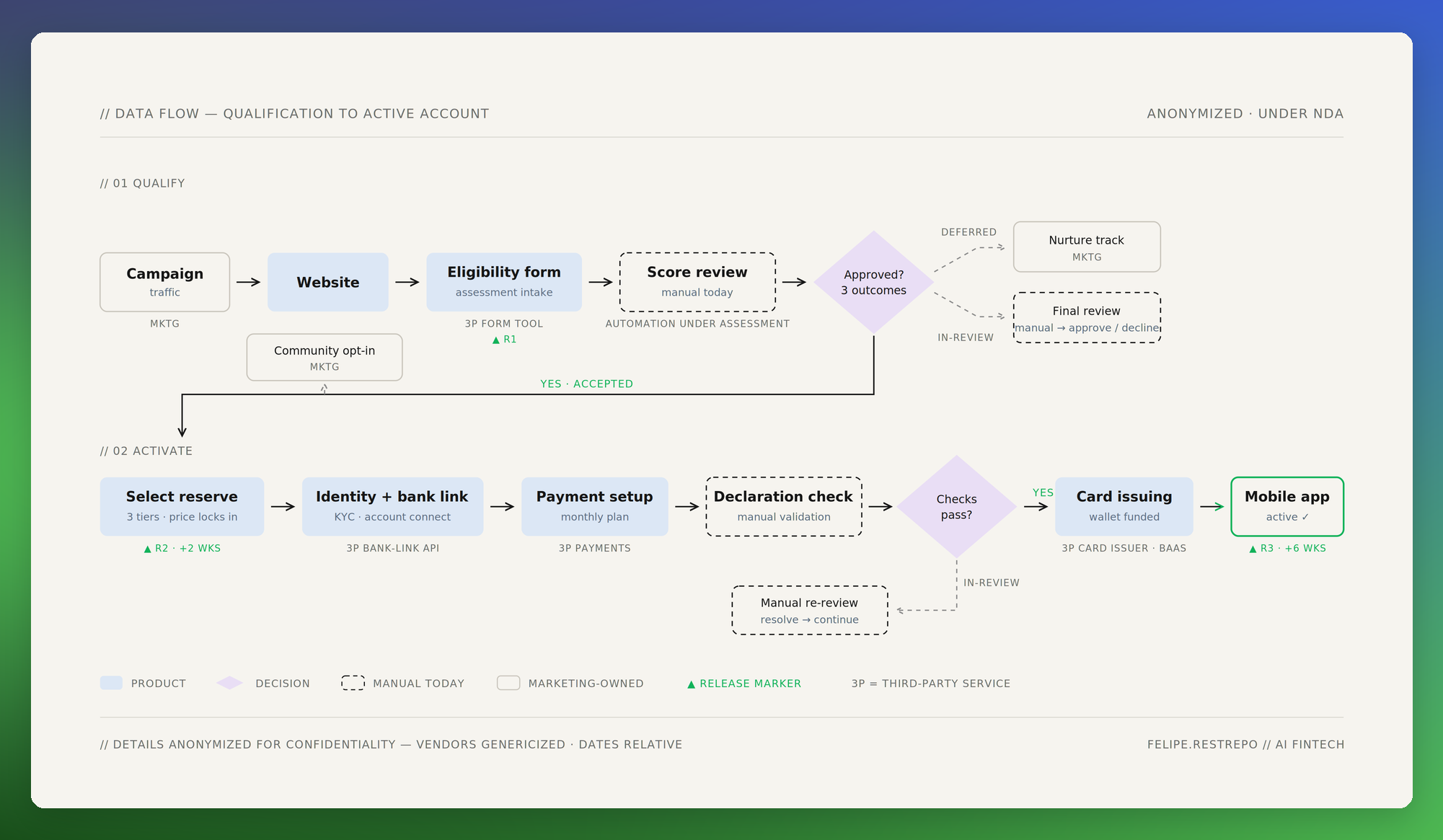
The flow shipped in three releases: the qualification form first, reserve selection two weeks later, the full app six weeks after that, each release instrumented so the next one was an answer, not a guess.
Every release was a question shipped to production.
We watched where real users hesitated in onboarding, which reserve tiers they chose, where trust broke, then fed each answer into the next protocol. Two hypotheses per phase, tested in parallel, iterated across the cycle. What moved, we doubled down on. What didn’t, we killed without ceremony, and killing fast was the point.
The roadmap stopped being a list of opinions and became a record of validated demand.
The cycle from idea to evidence compressed dramatically, from multi-week build cycles to a matter of days.