User research is slow, expensive, and out of reach for most teams, and the emotional “why” behind behavior stays invisible.
Insights take weeks, specialists are costly, and frustration, confusion, and delight never surface in traditional click-and-survey testing. A success metric can hide a frustrated user.
Research that captures emotion, automatically.
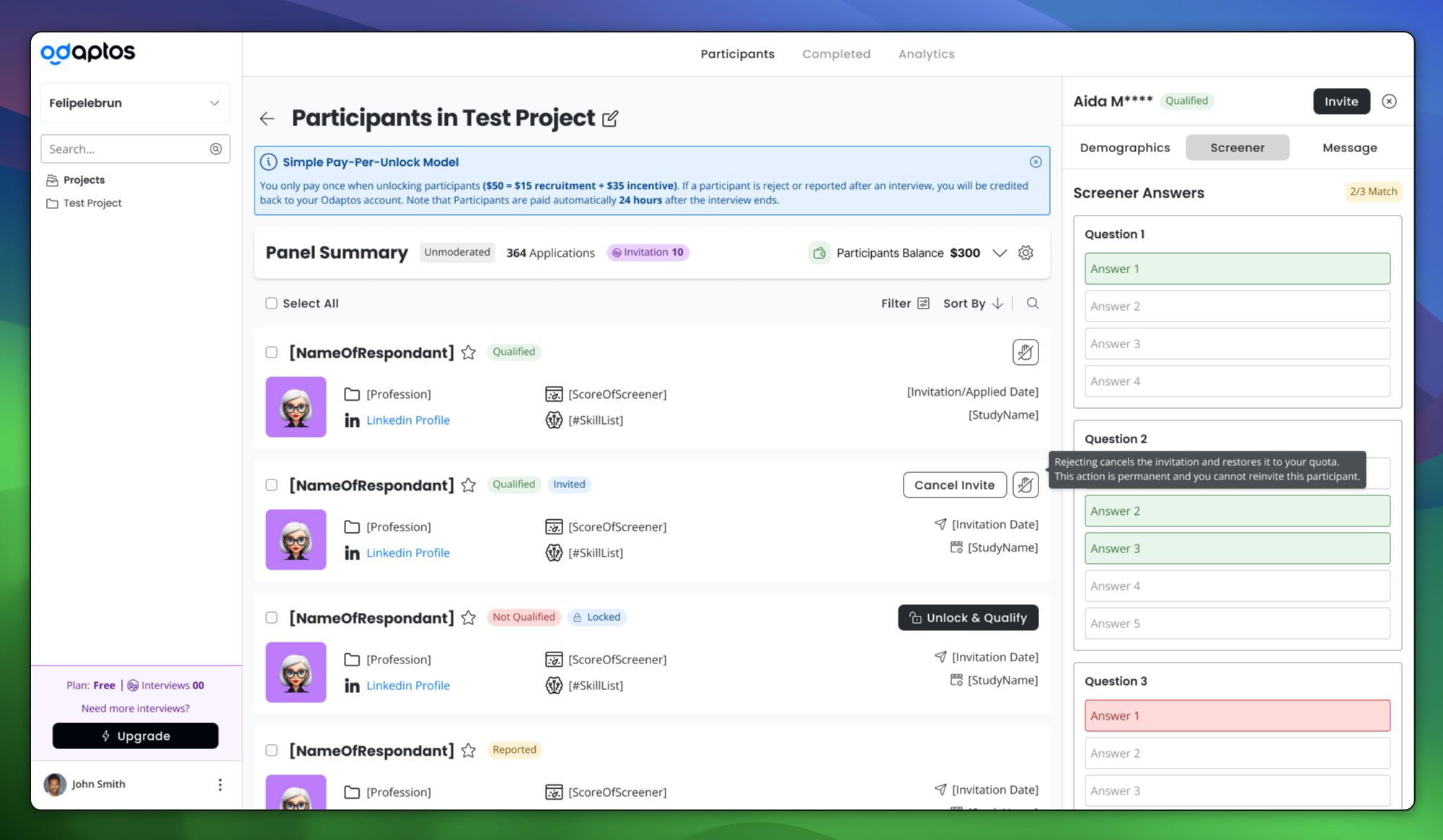
A platform that lets any team run moderated and unmoderated studies, then uses AI to surface the emotional and behavioral signal automatically, turning the invisible “why” into visible data.
The idea started in 2018, during my Master’s at Paris I Panthéon-Sorbonne. I kept seeing the same gap: teams knew research mattered, but cost and turnaround put real, continuous user understanding out of reach, so most shipped on opinion.
The part that bothered me most was that even when teams did test, the emotional truth of the experience slipped through. A success metric can hide a frustrated user. I incorporated Odaptos in 2020 and set out to make emotional, evidence-based research something a small team could run continuously.
I didn’t just design it. I built the company end to end: the original idea, the first product designs and component library, the initial user experience, and the early technical direction that let the engineering team start building. This is founding-designer work in the most literal sense, from a blank page to a shipping product with a team building behind it.
Existing tools captured behavior, but not real-time emotion.
I benchmarked the platforms teams were already using, the UserTesting, Maze, and Lookback class of tools, and talked with researchers, designers, and founders about where research actually broke down for them. Two things came up again and again. The tools captured behavior and self-reported feedback but missed real-time emotion, and they were priced and paced for enterprise research teams, not the lean product teams who needed to learn every week.
Primary users: product designers, PMs, and founders at small-to-mid teams who need insight fast and can’t staff a dedicated research org.
…let any team capture the emotional truth of a session, and act on it, without specialist researchers, big budgets, or week-long turnarounds?
AI was the unlock on three fronts.
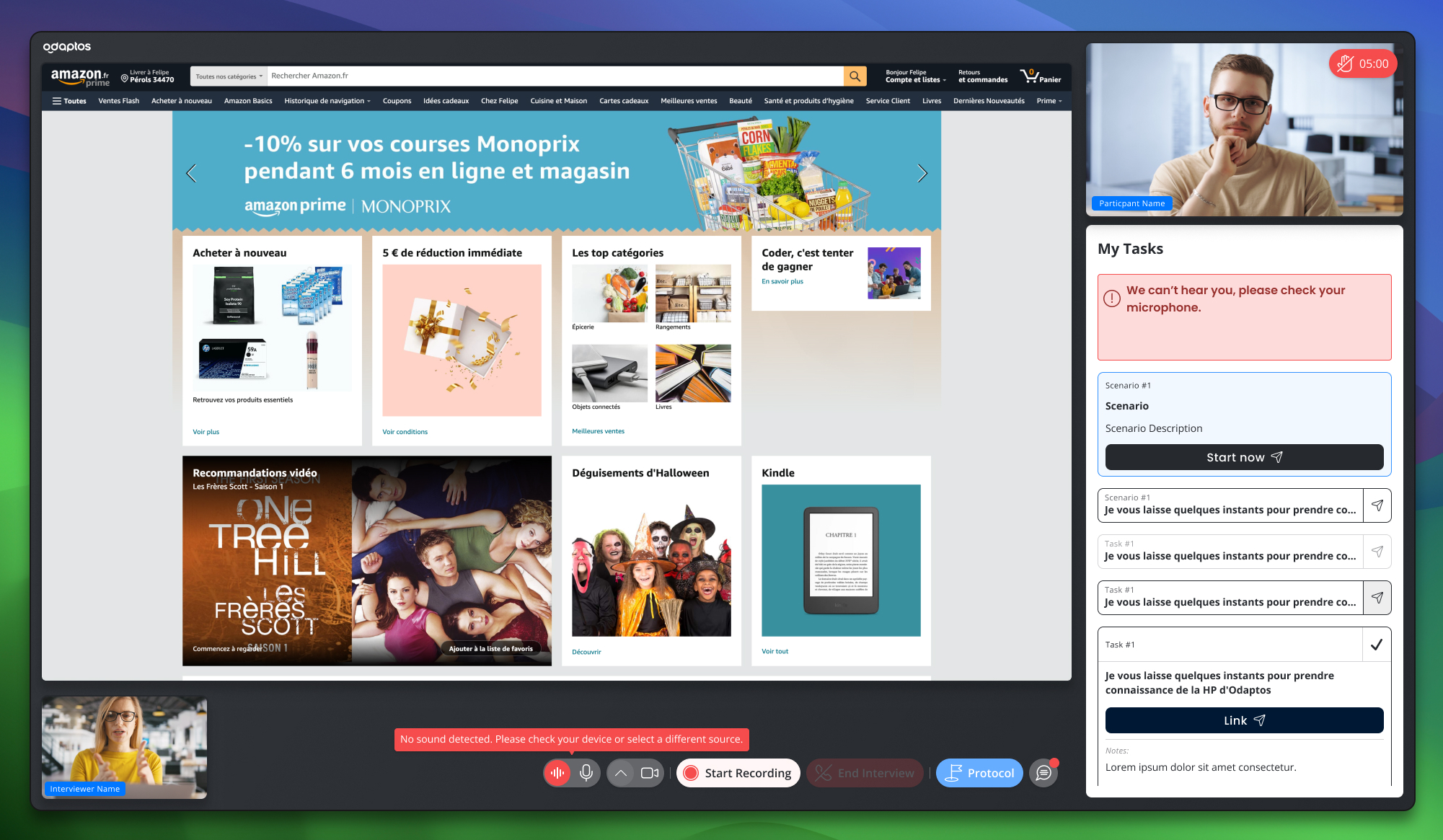
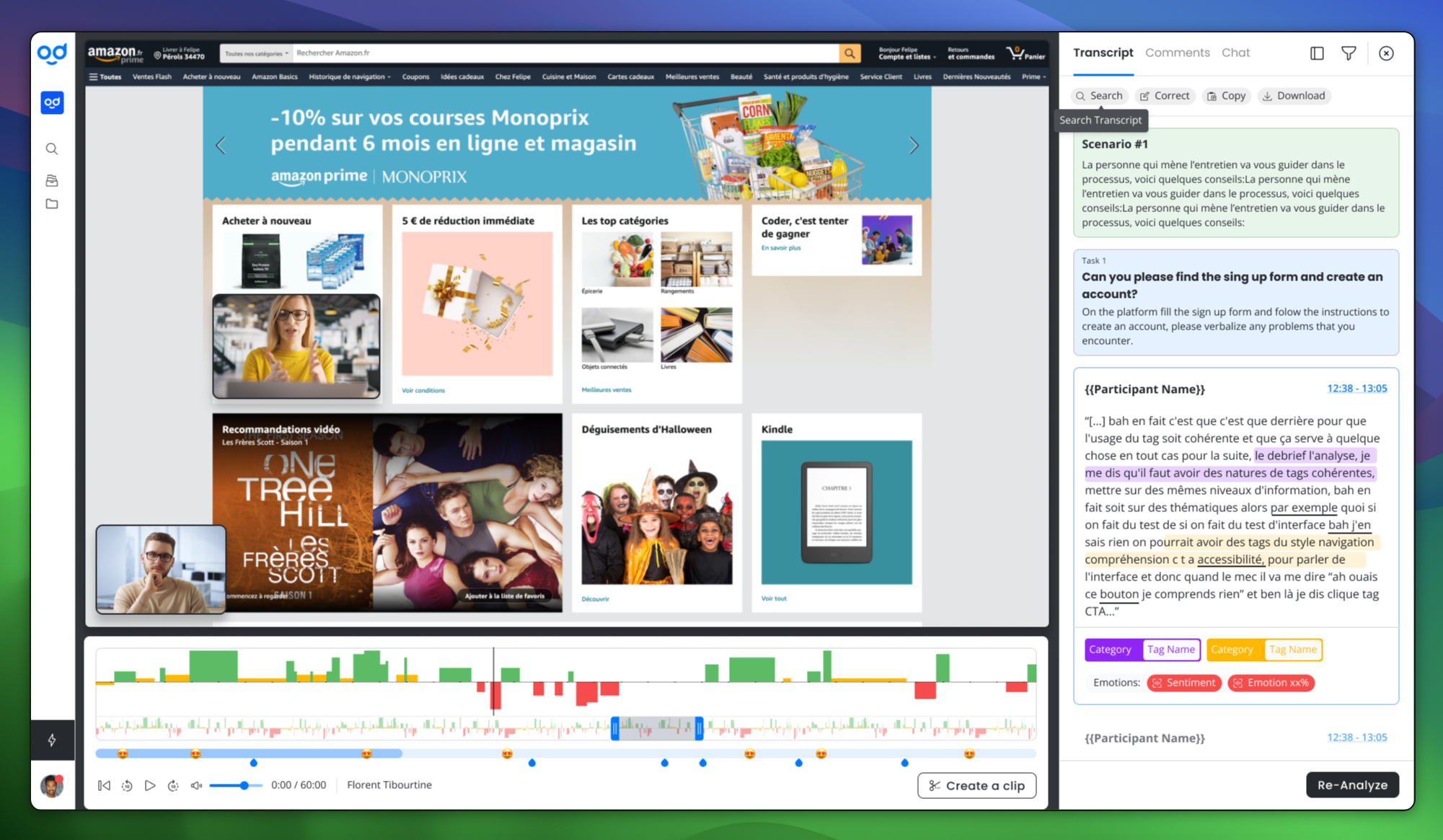
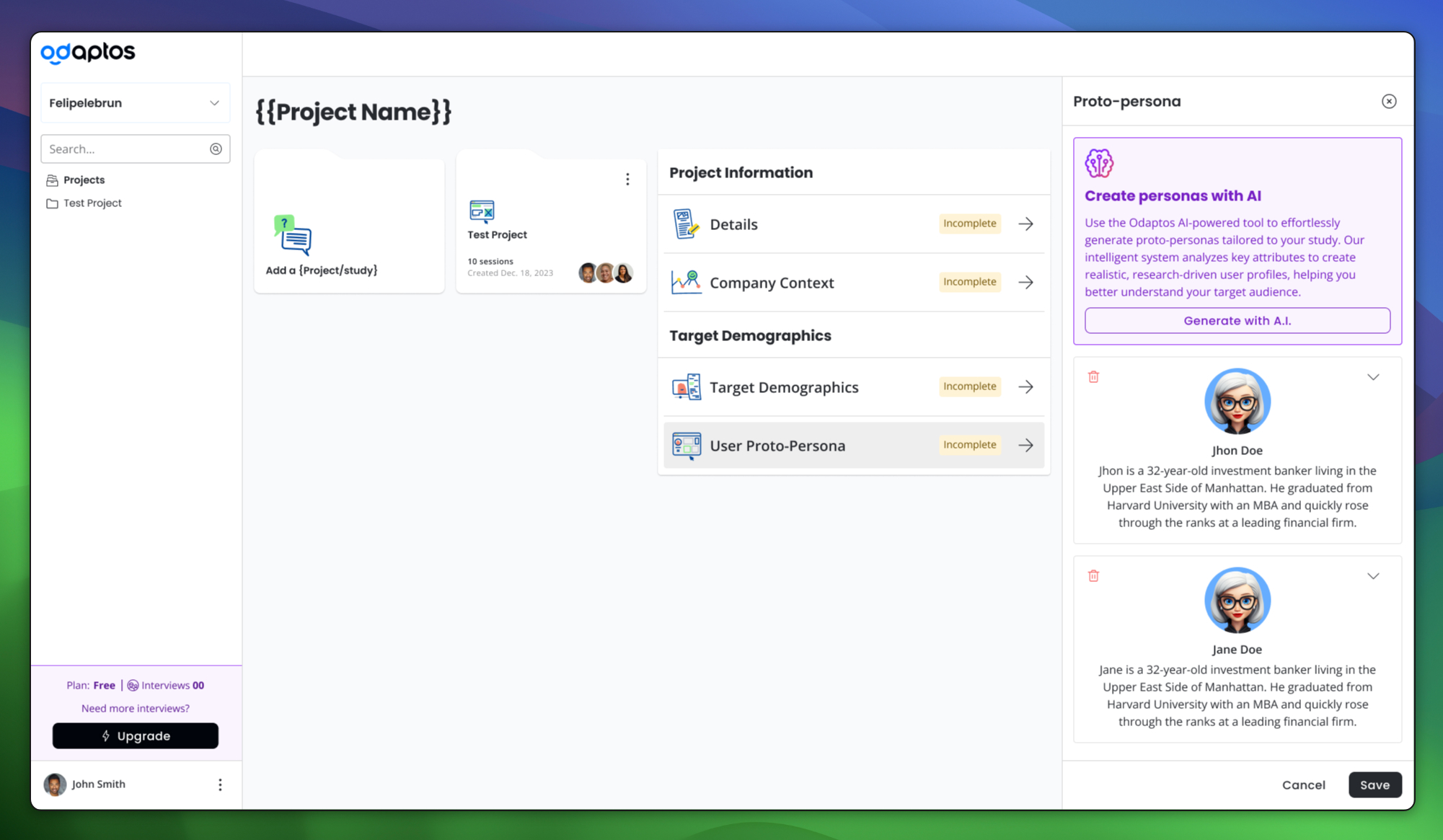
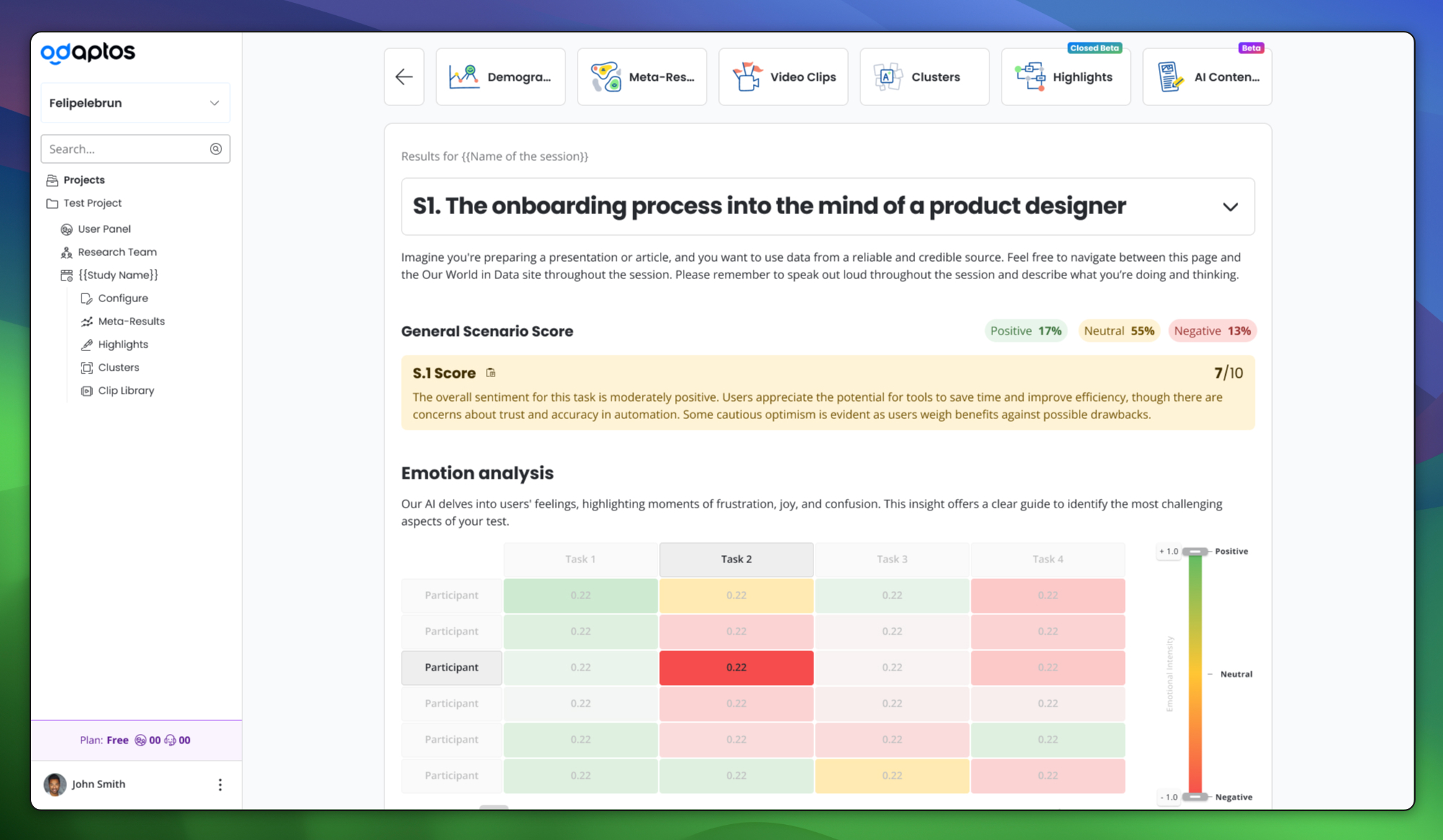
Core flow: study setup, then session capture, then AI analysis (emotion, transcription, tagging), then meta-results synthesis. I designed the architecture so the hardest part, making sense of a session, happened automatically, and the team’s job was to act on a clear result rather than wrangle raw footage.
As co-founder, I owned the entire design function, and the start of the technical one.
Interaction design, UI, the design system, and the brand were all mine to set. I also did the initial CTO work, defining the product’s structure and first technical direction so the engineering team had a foundation to build on. Owning both sides at once is exactly how a founding designer has to operate: close enough to the engineers to make the build real, and accountable for the experience end to end.
The hardest design problem was legibility. Emotion data is dense and easy to misread, so the central challenge was turning a stream of facial and vocal signal into something a designer or PM could glance at and trust. I designed an emotion timeline that aligned felt experience to the exact moment in a session, so a spike in frustration pointed straight to the screen that caused it. Around that I built a component library, the first version of the design system, so the product could grow in complexity without the interface fragmenting. The visual language stayed calm and neutral on purpose. When the data is emotional, the interface around it has to be quiet and credible, closer to an instrument than a dashboard.
We used Odaptos to improve Odaptos.
We deployed every two weeks and ran user interviews on our own platform, dogfooding the product to research itself. Watching real users struggle with the tool, through the same emotion-and-friction lens we were selling, was the fastest feedback loop I’ve worked in. The product’s own output told us where the product was failing.
That loop drove continuous iteration. A few patterns that came out of it:
- Where users hesitated or showed confusion in the emotion timeline, we simplified how results surfaced so the key moment was obvious without hunting for it.
- Friction in study setup, the step that gated everything else, got streamlined again and again, because every session we ran on ourselves showed us exactly where people stalled.
- Synthesis (meta-results) evolved the most, because watching teams try to act on raw sessions told us how much rollup and pattern-finding the product needed to do for them.
This is the loop the founding-designer role is really asking about: ship on a tight cadence, gather real signal, and feed it straight back into the product. We just happened to build the tool that ran the loop.
From a Master’s-project idea to an award-winning company.
I took Odaptos from a Master’s-project idea (2018) to an incorporated, award-winning company (CES 2023 Innovation Award), through Techstars Washington DC, and into the US and LATAM markets.
Along the way the platform was used by dozens of teams to run hundreds of research sessions, cutting the time from session to shareable insight from weeks to under a day.